
Maglev Doors: How They Work and Where to Use Them
 10/05/2026, 11:59 AM
PTADOOR's maglev doors use magnetic linear drive technology to move a sliding door. Often described as magnetic-levitation automatic doors, these systems combine a drive, controller and the mechanical components that support and guide the door leaf. For door manufacturers, installers and project buyers, understanding that distinction is the first step towards choosing a suitable system.
This guide explains how a maglev sliding door works, where the technology can be considered and what information helps turn an initial idea into a product enquiry.
How does a maglev sliding door work?
In PTADOOR's CF range, the magnetic drive generates force along the direction of door travel. The motor and moving rail have a non-contact magnetic drive arrangement. This differs from a conventional system in which a rotating motor transfers movement through a reduction gearbox and belt.
The controller manages opening and closing movement. Activation devices, such as a push button, sensor or access-control input, depend on the chosen controller and accessories.
Magnetic drive does not mean the entire door floats without mechanical support. Tracks, hangers, guidance and mounting components still need to be checked for the selected assembly. The drive principle and the structure carrying the door's weight are separate parts of the system.
Why consider a magnetic linear drive?
- Compact integration: the linear drive format can help manufacturers integrate automation into a door profile or overhead structure.
- A different transmission arrangement: the magnetic drive replaces the conventional geared drive approach. Confirm the components of the complete quoted assembly, especially for linked-door configurations.
- Controlled movement: speed and operating behaviour can be matched to the selected controller, door arrangement and project requirements.
Noise, maintenance and operating performance depend on the complete door, its installation and the selected configuration. Compare model-specific information rather than assuming that every maglev door has the same performance.
Where can maglev doors be used?
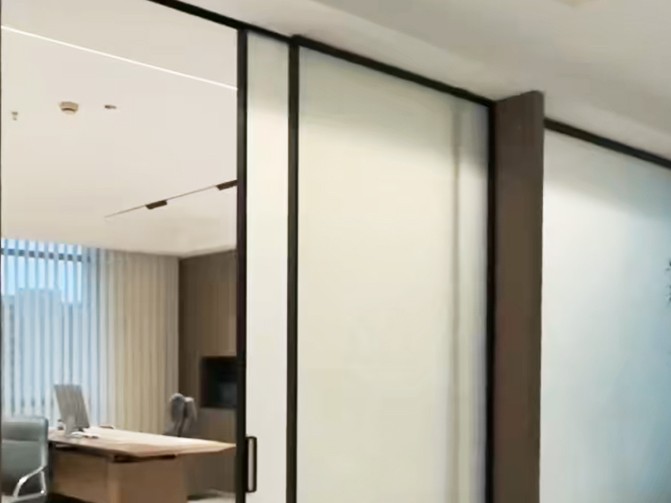
Door manufacturers can consider magnetic operators when developing automatic glass, framed or timber sliding doors. Interior partitions, office entrances and reception areas are examples of projects where the available profile space and desired door movement should be reviewed together.
For retail or hospitality interiors, describe the opening, door material, expected use and preferred appearance before selecting an operator. A compact drive may be relevant to the design, but the panel weight, support structure, activation devices and installation requirements still determine whether a particular model fits.
For a concrete product starting point, see the CF-F40 magnetic automatic door opener. The CF range contains different configurations; use the actual model information and drawings for your project.
What should you check before specifying a system?
- Door leaf dimensions, material and weight per moving leaf.
- Single-leaf, double-leaf or linked-panel opening arrangement.
- Available mounting space and a section drawing of the door profile.
- Required activation, access-control interfaces and operating environment.
- Whether you need a drive component or a defined operator package.
For a detailed drive comparison, read how CF magnetic linear drive differs from QT gearless drive. If profile space is the main question, see our guide to magnetic sliding door operators for slim aluminium profiles.
Discuss your maglev door project with PTADOOR
Send your door dimensions, leaf weight, profile drawing or installation photographs, project destination and expected quantity. Also tell us whether you are a door manufacturer, distributor, installer or project buyer.
Contact PTADOOR for a suitable configuration and quotation. These details help us review the proposed door and identify the model and supply scope to discuss.