
Pocket Door Automation: Magnetic Drive Integration Guide
 11/09/2026, 12:34 AM
Pocket door automation moves a sliding leaf into a wall cavity using a powered operator. Selecting that operator requires more than checking the door weight: the track, hangers, drive, wiring and service route must all work within the pocket construction. For door manufacturers and system integrators considering a magnetic linear drive, the key purchasing question is whether the complete assembly can be installed, adjusted and removed after the wall is finished.
This guide covers interior pedestrian pocket doors and the information needed for a CF drive integration enquiry. PTADOOR supplies magnetic door-drive components and operator configurations; compatibility with a particular pocket frame must be reviewed against drawings. A CF product listing is not confirmation of a ready-to-fit pocket door kit.
What an automatic pocket door opener needs to include
A pocket frame creates the space into which the door retracts. An operator powers the movement. A quotation for one does not necessarily include the other. Establish who supplies the frame, door leaf, supporting track, hangers, floor guide, drive, controller and activation devices before comparing prices.
| Supply option | What the buyer must establish |
|---|---|
| Complete automatic pocket door package | Which frame, leaf, operator and controls are included, and which installation work remains on site. |
| Operator and track assembly | The approved frame interface, hanger connection, track length and compatible door construction. |
| Magnetic linear-drive components for OEM integration | The matching controller and power supply, mechanical interfaces, running gear and responsibility for assembly validation. |
For an automatic pocket door kit enquiry, ask for an itemised parts list. Photos showing a complete doorway do not establish what will arrive in the shipment. State whether you need a sample for a new door range, a repeatable distributor configuration or an operator for a specific project.
Check the wall pocket in plan and section
Prepare two drawings. A plan view shows where the moving leaf sits when closed and fully open. A section through the head shows the track, suspension, drive, connections and access opening. Together they reveal conflicts that a doorway width alone cannot resolve.
| Drawing detail | Why it matters for automation |
|---|---|
| Clear passage, leaf width and required travel | The clear passage is the usable opening. Leaf overlap, the retained leading edge and stops affect how far the door must travel. |
| Usable pocket depth and internal width | Measure the finished internal space. Include projecting hardware, guide parts and wall finishes in the clearance review. |
| Complete head assembly | Show the track, hangers, drive, cover and fixings together. Motor dimensions alone do not describe the installation envelope. |
| Floor guidance and leaf connection | Identify how the leaf remains guided throughout its travel and how the suspension attaches to the actual leaf construction. |
| Electrical and service routes | Locate the power supply, controller, cable entry and removable access panels before the wall is closed. |
For a single pocket, show the whole storage area on one side of the opening. For two leaves retracting into opposite walls, provide both pockets and the proposed meeting detail. Do not treat a double pocket as a telescopic arrangement: leaves moving along parallel tracks introduce different layout and coordination questions.
Design the removal route before concealing the mechanism
A neat finish is useful only if the assembly can still be serviced. Ask the supplier to identify how a technician reaches the controller, adjusts the hangers and replaces the drive. Then check those instructions against the architect's wall and ceiling details.
A removable trim may provide access to a screw but still leave too little room to withdraw a long track or drive. Mark the component's removal direction and the working space required. Identify whether the door leaf must be removed first, which fasteners remain reachable and whether any finished wall surface must be opened.
For a repeat OEM assembly, include a removal and reinstallation demonstration in the sample review. Record the access-panel arrangement and drawing revision with the approved configuration. This gives the installer a defined service method rather than an assumption that “concealed” also means serviceable.
Where a magnetic linear drive fits the decision
A magnetic linear drive creates sliding motion through electromagnetic force. It can be considered when developing an interior door assembly, but the drive technology alone does not establish pocket compatibility. The supporting track, rolling components, suspension and guide remain part of the design review.
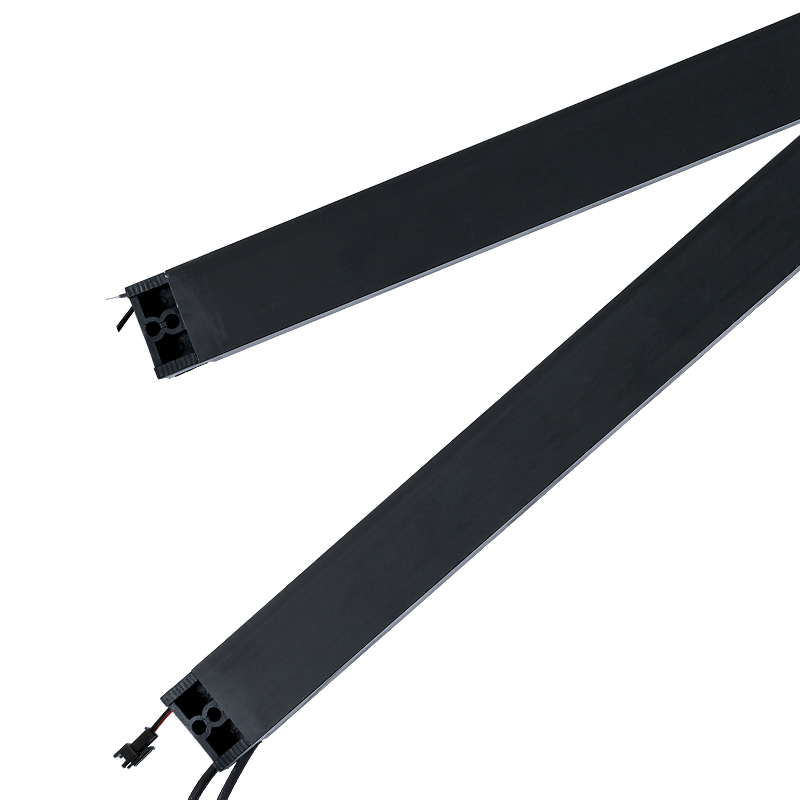
CF-40 product image from PTADOOR's component catalogue. The image shows components, not a completed pocket-door installation.
For an OEM discussion, review the CF-40 magnetic linear-drive component and send the pocket-frame drawings with your enquiry. Ask PTADOOR which model, controller and mechanical arrangement can be evaluated for that design. Confirm the complete moving-leaf weight, required travel and operating conditions for the proposed combination.
If your requirement is an operator assembly, the CF-F40 operator page provides a separate starting point for defining supply scope. Neither page establishes interchangeability with another manufacturer's pocket frame or track. For the head and profile review, see the slim-profile installation guide.
Retrofitting an existing manual pocket door
Start by identifying the existing frame and track, then inspect how the door moves manually. Binding, damaged running gear or an inaccessible track needs investigation before an operator is selected. A motor should not be specified simply to overcome a mechanical problem.
Provide photographs of the exposed head, pocket entrance, floor guide and leaf fixing. State which parts can be replaced and whether the finished wall may be opened. If the track cannot be identified or accessed, the installer needs to establish the available interfaces before a meaningful compatibility decision is possible.
Compare a proposed retrofit with replacement of the track assembly. Include access work, electrical provision and finishing work in that comparison. Avoid assuming that any automatic pocket door opener can be added to an existing manual system without changes.
Specify controls and sample acceptance
Describe how users should operate the door: a local push button, touchless activation or an access-control signal. Ask which devices and interfaces are supported by the selected controller and which are included in the quotation. Specify the required behaviour during power loss and how the user should operate the door manually; these details need confirmation for the assembled system.
The project team should also review detection needs, the closing edge and the point where the leaf enters the pocket. Ask for documentation applicable to the destination and intended use. A magnetic drive description or a component-level feature does not establish the performance or suitability of the finished door system.
Before approving a production configuration, agree a sample evaluation covering full travel, clear opening, leaf guidance, control response, the required power-loss behaviour and access for maintenance. Record the actual assembly, settings, findings and unresolved items. Approval of one sample should refer to that drawing and parts revision.
Send a pocket-door integration enquiry
Use “Pocket door automation — CF integration enquiry” as the subject and prepare:
- Your role, project location and whether this is an OEM design, distributor sample or existing-door retrofit.
- The frame or system reference, plus plan and head-section drawings showing both open and closed positions.
- The dimensions, material and complete weight of each moving leaf; mark any estimated figures.
- The clear passage, required travel, pocket dimensions and proposed track, hanger and guide arrangement.
- The access-panel design and proposed removal route for the drive, controller, track and door leaf.
- The power supply, activation method, requested interfaces and required operating behaviour.
- The items you want supplied, items supplied by your team, quantity and requested project timing.
Contact PTADOOR for a CF configuration review. Describe the drawings you have and ask how to share them. Request a proposed assembly drawing and an itemised quotation before confirming compatibility or placing an order.
Frequently asked questions
Is a concealed sliding door operator the same as a pocket door operator?
No. A concealed operator may sit behind an accessible cover while the door moves along the wall. A pocket door retracts into the wall cavity, which creates additional clearance, access and removal requirements.
Can I automate a pocket door without opening the wall?
That depends on the existing frame, removable track, access openings and proposed assembly. Provide the system reference and access details. Do not assume a retrofit can preserve every finished surface.
Does a CF linear-drive component include the pocket frame?
A component enquiry does not establish the supply of a frame, door leaf or complete operator kit. Confirm the exact parts, compatible assembly and responsibilities in the quotation.